The greatest needs of the University of Nebraska at Kearney. Gifts through the UNK Fund let you make a bigger difference on campus, your college and students.

The greatest needs of the University of Nebraska at Kearney. Gifts through the UNK Fund let you make a bigger difference on campus, your college and students.
UNK has a proud tradition of excellence and support when it comes to Loper Athletics and enjoy great success in all sports.
Find specific areas to support within your college, department, program or area of interest.
Looking for ways to make the greatest impact to the University of Nebraska at Kearney and its students? Here are some great options.
No matter your circumstances. No matter your age or financial situation. If leaving a legacy is important to you, we can help through planned giving.
UNK AA has been working since 1906 to promote communication and interaction among more than 40,000 alumni, students, faculty, administrators and friends of the University of Nebraska at Kearney.
The greatest needs of the University of Nebraska-Lincoln. Gifts through the N Fund let you make a bigger difference on campus, your college and students.
Husker athletic programs at the University of Nebraska-Lincoln are a source of pride for alumni and Nebraskans throughout the state and around the world.
Find specific areas to support within your college, department, program or area of interest.
Looking for ways to make the greatest impact to the University of Nebraska-Lincoln and its students? Here are some great options.
No matter your circumstances. No matter your age or financial situation. If leaving a legacy is important to you, we can help through planned giving.
NAA is a nonprofit organization that connects alumni with Dear Old Nebraska U, and with each other, for the betterment of the University of Nebraska-Lincoln.
The greatest needs of the University of Nebraska Medical Center. Gifts through the Innovation Funds let you make a bigger difference on campus, your college and students.
There are many ways to give including employer matching, payroll giving, donor advised funds, tangible property, grain, stocks and more.
Find specific areas to support within your college, department, program or area of interest.
Looking for ways to make the greatest impact to the University of Nebraska Medical Center and its students? Here are some great options.
No matter your circumstances. No matter your age or financial situation. If leaving a legacy is important to you, we can help through planned giving.
The mission of the UNMC Alumni Relations Office is to serve and engage with learners and graduates through effective communications, the formation of meaningful relationships, and opportunities to invest in the advancement of the university through gifts of time, talent, and treasure.

The greatest needs of the University of Nebraska-Omaha. Gifts through the UNO Fund let you make a bigger difference on campus, your college and students.
Our athletes are competing at the Division I level in collegiate sports, not only enhance the visibility of UNO, but also to provide great benefits to all of Omaha.
Find specific areas to support within your college, department, program or area of interest.
Looking for ways to make the greatest impact to the University of Nebraska at Omaha and its students? Here are some great options.
No matter your circumstances. No matter your age or financial situation. If leaving a legacy is important to you, we can help through planned giving.
UNO AA is an organization focused on strengthening connections with more than 100,000 UNO alumni, students and friends from all over the world.
Nebraska Medicine and its research and education partner, the University of Nebraska Medical Center, share the same mission: to lead the world in transforming lives to create a healthy future for all individuals and communities through premier educational programs, innovative research and extraordinary patient care.
These funds support innovative initiatives at Nebraska Medicine that allow the academic health network to take advantage of emerging opportunities.
There are many ways to give including employer matching, payroll giving, donor advised funds, tangible property, grain, stocks and more.
Looking for ways to make the greatest impact at Nebraska Medicine? Here are some great options.
No matter your circumstances. No matter your age or financial situation. If leaving a legacy is important to you, we can help through planned giving.
The Nebraska College of Technical Agriculture is devoted to a statewide mission of preparing students for successful careers in agriculture, veterinary technology and related industries. The college provides open access to innovative technical education resulting in associate degrees, certificates and other credentials.
Members of the NCTA Aggie Alumni Association support the Curtis Aggie NCTA Scholarship Fund.
Looking for ways to make the greatest impact at NCTA? Here are some great options.
No matter your circumstances. No matter your age or financial situation. If leaving a legacy is important to you, we can help through planned giving.
There are many ways to give including employer matching, payroll giving, donor advised funds, tangible property, grain, stocks and more.
The mission of the Buffett Early Childhood Institute at the University of Nebraska is to transform the lives of young children by improving their learning and development.
Every day, nearly a billion people in the world do not have enough safe and nutritious food to lead healthy and active lives. Many of them also lack access to enough clean water to meet their needs. By 2050, our global food demand will double to meet the needs of nearly 10 billion people, making water and food security one of the most urgent global challenges of our time.
Looking for ways to make the greatest impact? Here are some great options.
No matter your circumstances. No matter your age or financial situation. If leaving a legacy is important to you, we can help through planned giving.
Your giving to this area enables the president’s office to quickly direct resources to various university projects and areas across the system as needs arise.
The greatest needs of the University of Nebraska at Kearney. Gifts through the UNK Fund let you make a bigger difference on campus, your college and students.
The greatest needs of the University of Nebraska-Lincoln. Gifts through the N Fund let you make a bigger difference on campus, your college and students.
The greatest needs of the University of Nebraska Medical Center. Gifts through the Innovation Funds let you make a bigger difference on campus, your college and students.
The greatest needs of the University of Nebraska-Omaha. Gifts through the UNO Fund let you make a bigger difference on campus, your college and students.
Add your voice and your support to see the power of the crowd in action.
The greatest needs of the University of Nebraska at Kearney. Gifts through the UNK Fund let you make a bigger difference on campus, your college and students.
UNK has a proud tradition of excellence and support when it comes to Loper Athletics and enjoy great success in all sports.
Find specific areas to support within your college, department, program or area of interest.
Looking for ways to make the greatest impact to the University of Nebraska at Kearney and its students? Here are some great options.
No matter your circumstances. No matter your age or financial situation. If leaving a legacy is important to you, we can help through planned giving.
UNK AA has been working since 1906 to promote communication and interaction among more than 40,000 alumni, students, faculty, administrators and friends of the University of Nebraska at Kearney.
The greatest needs of the University of Nebraska-Lincoln. Gifts through the N Fund let you make a bigger difference on campus, your college and students.
Husker athletic programs at the University of Nebraska-Lincoln are a source of pride for alumni and Nebraskans throughout the state and around the world.
Find specific areas to support within your college, department, program or area of interest.
Looking for ways to make the greatest impact to the University of Nebraska-Lincoln and its students? Here are some great options.
No matter your circumstances. No matter your age or financial situation. If leaving a legacy is important to you, we can help through planned giving.
NAA is a nonprofit organization that connects alumni with Dear Old Nebraska U, and with each other, for the betterment of the University of Nebraska-Lincoln.
The greatest needs of the University of Nebraska Medical Center. Gifts through the Innovation Funds let you make a bigger difference on campus, your college and students.
There are many ways to give including employer matching, payroll giving, donor advised funds, tangible property, grain, stocks and more.
Find specific areas to support within your college, department, program or area of interest.
Looking for ways to make the greatest impact to the University of Nebraska Medical Center and its students? Here are some great options.
No matter your circumstances. No matter your age or financial situation. If leaving a legacy is important to you, we can help through planned giving.
The mission of the UNMC Alumni Relations Office is to serve and engage with learners and graduates through effective communications, the formation of meaningful relationships, and opportunities to invest in the advancement of the university through gifts of time, talent, and treasure.
The greatest needs of the University of Nebraska-Omaha. Gifts through the UNO Fund let you make a bigger difference on campus, your college and students.
Our athletes are competing at the Division I level in collegiate sports, not only enhance the visibility of UNO, but also to provide great benefits to all of Omaha.
Find specific areas to support within your college, department, program or area of interest.
Looking for ways to make the greatest impact to the University of Nebraska at Omaha and its students? Here are some great options.
No matter your circumstances. No matter your age or financial situation. If leaving a legacy is important to you, we can help through planned giving.
UNO AA is an organization focused on strengthening connections with more than 100,000 UNO alumni, students and friends from all over the world.
Nebraska Medicine and its research and education partner, the University of Nebraska Medical Center, share the same mission: to lead the world in transforming lives to create a healthy future for all individuals and communities through premier educational programs, innovative research and extraordinary patient care.
These funds support innovative initiatives at Nebraska Medicine that allow the academic health network to take advantage of emerging opportunities.
There are many ways to give including employer matching, payroll giving, donor advised funds, tangible property, grain, stocks and more.
Looking for ways to make the greatest impact at Nebraska Medicine? Here are some great options.
No matter your circumstances. No matter your age or financial situation. If leaving a legacy is important to you, we can help through planned giving.
The Nebraska College of Technical Agriculture is devoted to a statewide mission of preparing students for successful careers in agriculture, veterinary technology and related industries. The college provides open access to innovative technical education resulting in associate degrees, certificates and other credentials.
Members of the NCTA Aggie Alumni Association support the Curtis Aggie NCTA Scholarship Fund.
Looking for ways to make the greatest impact at NCTA? Here are some great options.
No matter your circumstances. No matter your age or financial situation. If leaving a legacy is important to you, we can help through planned giving.
There are many ways to give including employer matching, payroll giving, donor advised funds, tangible property, grain, stocks and more.
The mission of the Buffett Early Childhood Institute at the University of Nebraska is to transform the lives of young children by improving their learning and development.
Every day, nearly a billion people in the world do not have enough safe and nutritious food to lead healthy and active lives. Many of them also lack access to enough clean water to meet their needs. By 2050, our global food demand will double to meet the needs of nearly 10 billion people, making water and food security one of the most urgent global challenges of our time.
Looking for ways to make the greatest impact? Here are some great options.
No matter your circumstances. No matter your age or financial situation. If leaving a legacy is important to you, we can help through planned giving.
Your giving to this area enables the president’s office to quickly direct resources to various university projects and areas across the system as needs arise.
The greatest needs of the University of Nebraska at Kearney. Gifts through the UNK Fund let you make a bigger difference on campus, your college and students.
The greatest needs of the University of Nebraska-Lincoln. Gifts through the N Fund let you make a bigger difference on campus, your college and students.
The greatest needs of the University of Nebraska Medical Center. Gifts through the Innovation Funds let you make a bigger difference on campus, your college and students.
The greatest needs of the University of Nebraska-Omaha. Gifts through the UNO Fund let you make a bigger difference on campus, your college and students.
Add your voice and your support to see the power of the crowd in action.
Home > Archives for July 27, 2023

When Janine and Kevin McArdle tell people where they’re from, they usually hear some or all of these words in response: football, Bob Devaney and Tom Osborne.
And while the Nebraska natives and University of Nebraska–Lincoln alumni cherish their Saturdays in the fall as much as any Nebraska fan, they have a different vision for the Cornhusker State.
“If I had a perfect world, we’d be as well known for our engineering program as we are for football,” said Kevin.
The McArdles, who have lived outside of Nebraska for about 30 years, both graduated with Bachelor of Science degrees in engineering from UNL and went on to highly successful careers in the energy industry. Janine is the founder and CEO of Apex Strategies, a global energy consultancy firm, and was recognized in 2014 as one of the 50 most powerful women in the oil and gas industry. She said her experience at UNL provided the foundation for her career.
“It prepared me quite well for going into business in a man’s world,” she said. “You started getting that sense of how to speak up for yourself and stand for what you thought was right.”
Kevin studied construction management at UNL and eventually took over his family’s construction business. He said the combination of business and construction management classes he took at UNL prepared him for a career that incorporated both elements.
“It allowed me to see multiple aspects of projects,” Kevin said, “from top to bottom and from the economic side. Going back into my family’s business, it just was a perfect evolution for me.”
“I think [the Complete Engineer] is a really good program, and very unique and different. You can go to a lot of great universities, but you’re not going to find that program.
— Janine McArdle
The McArdles, who are University of Nebraska Foundation Trustees, are strong supporters of the College of Engineering, which has undergone a massive expansion in recent years. They provided capital and programmatic support as the college embarked on a multistage construction project that included the Engineering Research Center, an 87,000-square-foot building that replaced an aging structure known as the Link; the Scott Engineering Center, which is being renovated to provide research and lab space; and Kiewit Hall, which is slated to open for classes in spring 2024. In total, the $190 million development represents the largest academic facilities project in university history.
The College of Engineering transformation aligns with the college’s commitment to preparing students for the rapidly expanding and ever-changing future of engineering.
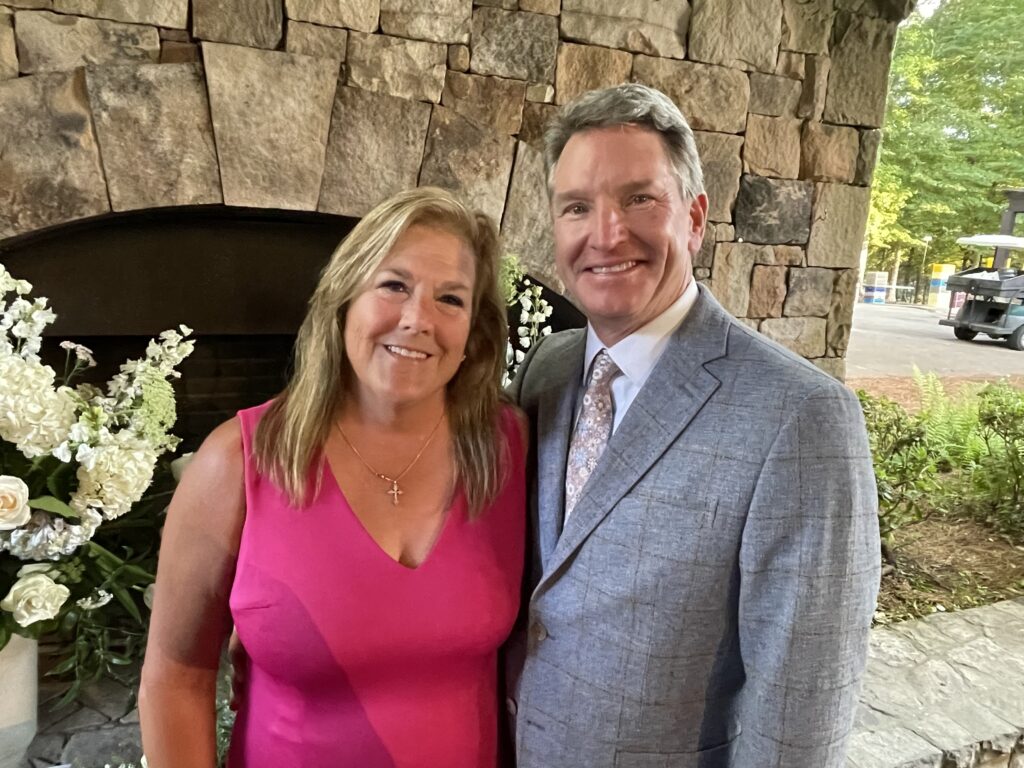
“It’s this idea of the ‘complete engineer,’” said Janine. “It’s really about making the engineer more than just an engineer. I think it’s a really good program, and very unique and different. You can go to a lot of great universities, but you’re not going to find that program, and that, to me, makes a big difference.”
Janine said today’s graduates will face engineering challenges that are far more complex than in years past, especially considering the daily advances in technology and artificial intelligence.
“The engineering industry is rapidly expanding and growing,” she said. “What we thought was challenging, you know, to put in a high-pressure pipeline over a mountain range, it’s going to be nothing compared to what they’ll be doing in the future. So, I think it’s pretty exciting.”
The McArdles are so excited for the future at the College of Engineering that they decided to assume a more public role in their philanthropy and as trustees. They recently co-hosted trustee events in Scottsdale, Arizona, and have opened their Texas home for events. It’s a new role for them, but they are hopeful it can inspire others to support the university.
“Janine and I usually fly under the radar a little bit when it comes to philanthropy,” Kevin said. “But this was something that we felt was probably very influential for us to help with … if it spurs on just one other couple or one other individual to help promote the university and add to the enhancement of what they’re trying to accomplish.”
Preparing the next generation of engineers is personal to both Janine and Kevin. Their son is an aerospace engineer, and they have two nephews who graduated from the College of Engineering.
“If you can look back someday, and say we helped someone else follow their dream and their passion to become an engineer, that we made it easier for them to do that, then that’s all you can ask for in life,” said Janine, “to be able to give back and pass that baton.”
By John Keenan, UNMC and Connie White, University of Nebraska Foundation
Support from state, community puts Nebraska in forefront of battle against deadly disease
The University of Nebraska Medical Center, Nebraska Medicine and the University of Nebraska Foundation have successfully secured the funds necessary to qualify for the state match funding of $15 million for the Pancreatic Cancer Center of Excellence, university officials announced this week.
“With their continued investments in cancer research, the Nebraska philanthropic community has shown once again that they are unmatched in their vision and generosity toward this state,” said Jeffrey P. Gold, MD, chancellor of UNMC. “Through their support, the medical center’s history of impactful public/private partnerships continues. Our goal is a cure for pancreatic cancer, and this support sets us strongly on that path.”
The state match funding will enable campus leadership to build systems and programs of international significance and reputation; recruit world-class physicians and scientists, including those in immunobiology, cancer metabolism and bioinformatics; and pioneer novel projects in the diagnosis, treatment and prevention of pancreas cancer.
Dr. Gold thanked the members of the Nebraska Legislature, especially former state Sen. Mark Kolterman, for their support of UNMC’s efforts. Kolterman was a legislative champion for the legislation – later signed by then-Gov. Pete Ricketts – for the matching state funds.
Sen. Kolterman, whose wife, Suzanne, died of pancreatic cancer in 2017, said the match was “wonderful news.”
With the support from the state and the community, he said, UNMC has put the right people in the right positions, pointing to leaders such as Sunil Hingorani, MD, PhD, the Nancy Armitage Pancreas Cancer Clinical Research Presidential Chair and director of the Pancreatic Cancer Center of Excellence; Tony Hollingsworth, PhD, the Hugh & Jane Hunt Chair in Cancer Research at the Eppley Institute; and Kelsey Klute, MD, associate professor of hematology/oncology at UNMC and medical director for the Cancer Risk and Prevention Clinic at Nebraska Medicine.
“We can make a difference,” Sen. Kolterman said, pointing to the medical center’s top researchers and clinicians. “Nebraska is going to be on the cutting edge of a cure or an early detection method, that is the most important thing. We have the best of the best on our team.”
Dr. Hingorani, who became the Nancy Armitage Pancreas Cancer Clinical Research Presidential Chair and the first director of the center in 2022, said the center’s goal is nothing short of a complete transformation of what is considered “state of the art” for the early detection, chemoprevention and treatment of this devastating disease.
“The funds provided by the state of Nebraska, as well as the generous contributions of community leaders and philanthropists who have been touched by this disease, makes a powerful statement about the aspirations and the expectations of the leadership of this state and its people for the Pancreatic Cancer Center of Excellence,” he said.
Although the medical center already provides the highest level of cancer care in Nebraska, Dr. Hingorani said, “the unprecedented scale of this extraordinary partnership between the public and private sectors in the state now sets the bar even higher, making clear that ‘good’ is not ‘good enough’ when greatness is within reach.”
Kenneth Cowan, MD, PhD, director of the Fred & Pamela Buffett Cancer Center, also expressed his appreciation.
“We are grateful for this support which will enable our pancreatic cancer research team to develop new therapies for patients across the state and beyond,” Dr. Cowan said.
As evidence the center’s efforts already are attracting national attention, Dr. Hingorani pointed to recognition earlier this year by the National Pancreas Foundation for both outstanding clinical care and scientific innovation, as well as the Canopy Collective Learning Health Network’s naming of the center as a member site for superior multidisciplinary patient care.
“The Fred & Pamela Buffett Cancer Center houses one of the first and largest in the nation early detection and surveillance programs for patients at high risk of developing pancreas cancer, the first rapid autopsy program in the country for pancreas cancer patients, and also boasts deep experience in basic science discovery for this disease,” he said. “The challenge now is to unify these efforts and integrate them into a larger, coordinated program with the defined goal of finding a cure.
“The best is yet to come.”
The philanthropic gifts made to the Pancreatic Cancer Center of Excellence were made as part of Only in Nebraska: A Campaign for Our University’s Future, a historic effort to engage at least 150,000 benefactors to give $3 billion to support the University of Nebraska.
About UNMC
We are Nebraska Medicine and UNMC. Our mission is to lead the world in transforming lives to create a healthy future for all individuals and communities through premier educational programs, innovative research and extraordinary patient care.
About the University of Nebraska Foundation
The University of Nebraska Foundation grows relationships and resources that enable the University of Nebraska to change lives and save lives. During the fiscal year that ended June 30, 2022, a record 60,571 donors gave $300.6 million to the foundation to aid the University of Nebraska at Kearney, University of Nebraska at Omaha, University of Nebraska–Lincoln, University of Nebraska Medical Center and its clinical partner, Nebraska Medicine, and Nebraska College of Technical Agriculture. The foundation raises more than $7 for every $1 spent. Only in Nebraska: A Campaign for Our University’s Future is its current campaign, with a goal to raise $3 billion from 150,000 unique benefactors to support the University of Nebraska. More information is at OnlyinNebraska.org.