The greatest needs of the University of Nebraska at Kearney. Gifts through the UNK Fund let you make a bigger difference on campus, your college and students.

With support from Schwab Advisor Services and the Charles Schwab Foundation, the University of Nebraska–Lincoln College of Business has created a more direct pathway for Huskers to enter one of the nation’s fastest-growing financial careers.
Beginning fall 2026, finance majors can choose a new option designed to prepare them for careers in personal financial planning, wealth management and related fields while positioning them to pursue the Certified Financial Planner credential earlier in their careers.
“This new financial planning option at the University of Nebraska–Lincoln aligns with our priorities at Schwab to broaden access to financial advising careers, strengthen fiduciary education and build a pipeline of ethical professionals focused on serving clients,” said Jon Beatty, head of Schwab Advisor Services. “We are pleased to support this new initiative that will prepare graduates to pass the CFP exam sooner in their careers and thrive as trusted advisors.”
Schwab Advisor Services in partnership with the Charles Schwab Foundation made a gift commitment to expand hands-on learning opportunities and strengthen connections between students and the independent Registered Investment Advisor profession, helping to prepare students for certification and careers in financial planning. The pledge was made as part of Only in Nebraska: A Campaign for Our University’s Future, a historic effort to engage 150,000 donors to raise $3 billion to support the University of Nebraska.
“The generous gift from Schwab provides key experiences to connect classroom learning with the realities of professional practice,” said Kathy Farrell, James Jr. and Susan Stuart Endowed Dean of the College of Business. “Students will engage directly with leaders in the Registered Investment Advisor community. These opportunities prepare our students to serve clients thoughtfully and responsibly.”
Demand for financial planners continues to grow as individuals and families seek guidance navigating increasingly complex financial decisions such as retirement planning, investment strategies, and tax and estate planning. According to the U.S. Bureau of Labor Statistics, employment of personal financial advisors is projected to grow 10% from 2024 to 2034, faster than the average for most occupations. Global consulting firm McKinsey & Company estimates that retirements may outpace recruitment, potentially creating a shortfall of 90,000 to 110,000 advisors by 2034 if trends continue.
The Nebraska program aims to help meet that demand while positioning students to enter the profession sooner.
Brett Burchett, a 2020 Nebraska Business alumnus and wealth advisor at FP Wealth Management, sees that as a plus.
“The average age for those passing the CFP exam is 26,” Burchett said. “This program will allow Huskers to get an earlier start in the financial planning industry as they pair their Big Ten education with a more focused approach to financial planning.”
Students pursuing financial planning option will learn about key areas of financial planning, estate planning, taxation, retirement and employee benefits.
“By combining specialized coursework with the broader analytical foundation of the finance major, students graduate with both technical expertise and client-centered planning skills,” said Stanislava Nikolova, chair of the Department of Finance, Alice M. Dittman Chair of Banking and Finance and professor of finance. “Employers are looking for professionals who can guide clients through real-life financial decisions with knowledge, integrity and empathy, and the financial planning option helps our students begin building those skills while they are still in college.”
The new option builds on the strong foundation of the Department of Finance, where the undergraduate investment option in the finance major and the online Master of Science in Finance programs are CFA Institute University Affiliated Programs. Other options in the finance major include banking and risk management and general finance. The department also houses the Actuarial Science Program, recognized as a Center of Actuarial Excellence by the Society of Actuaries. Students in Howard L. Hawks Hall use Bloomberg terminals and collaborative learning spaces designed to mirror professional financial environments.
With more than 950 declared finance majors – the largest major in the college – Nebraska Business is well positioned to address workforce demand for financial planners across the state and nation.
“Through our collaboration with Schwab, the new financial planning option in finance provides students with direct preparation for the CFP exam and a strong foundation in client-centered financial planning,” Farrell said. “We value Schwab’s partnership in helping us create meaningful pathways for students to meet the growing demand for trusted financial advisors.”
The Bedford Falls Foundation-DAF has committed $1.5 million to establish scholarships for 100 students each year in the University of Nebraska Medical Center College of Nursing.
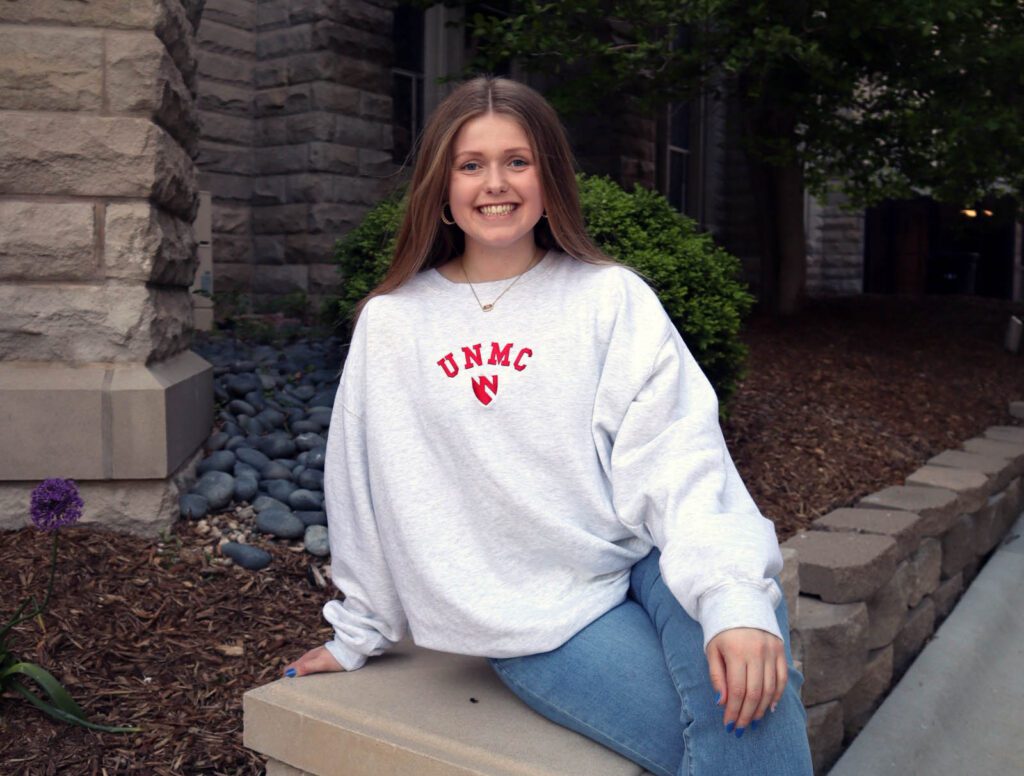
The Joanne and William Conway Nursing Scholarship will be awarded to Nebraska residents pursuing a Bachelor of Science in Nursing at UNMC who are in good academic standing and demonstrate financial need. Students may be enrolled in any College of Nursing division — Omaha, Lincoln, Scottsbluff, Kearney and Norfolk. The scholarship will be awarded for the next three years, beginning in fall 2026.
Scholarship recipients will be known as Conway Scholars and receive an average award of $5,000 per year.
“There is a clear need for more nurses,” said Bill Conway, Jr. “We are pleased to partner with the University of Nebraska Medical Center to help grow Nebraska’s nursing workforce and support a healthier future for Nebraskans.”
Nebraska faces a shortage of nearly 6,700 nurses. In addition, nine counties report having no nurses working in their counties, according to the Nebraska Center for Nursing report published in 2025.
“The UNMC College of Nursing is deeply grateful to Bedford Falls for its generous gift, which opens doors for aspiring nurses to pursue their education,” said Lepaine Sharp-McHenry, DNP, dean of the UNMC College of Nursing. “Scholarships like this not only ease financial burdens but also empower students to focus on developing the competencies and compassion needed to care for our communities. Bedford Falls’ support is helping to shape the future of nursing, one student at a time.”
The Bedford Falls Foundation and its related donor advised fund were established by Bill Conway, Jr., co-founder and co-chairman of the global investment firm the Carlyle Group, and his late wife, Joanne Barkett Conway. The foundation takes its name from the fictional town in the movie It’s a Wonderful Life and is a nod to the good luck the Conways experienced in their own lives. Since 1997, the Conways, directly and through the foundation and the donor advised fund that it advises, have distributed and committed over $380 million to nursing programs across the country.
The gift was made through the University of Nebraska Foundation. Scholarships are a top priority of Only in Nebraska: A Campaign for Our University’s Future, a historic effort to raise $3 billion from 150,000 unique benefactors to support the University of Nebraska.
To learn about opportunities to support the UNMC College of Nursing, contact Camtrice Botos, director of development with the University of Nebraska Foundation, at [email protected].
###
About UNMC
As Nebraska’s only public academic health science center, the University of Nebraska Medical Center enrolls more than 4,800 students across six colleges, two institutes and a graduate studies program. Its mission is to create a healthier future for Nebraskans through premier education, research and clinical care, but its impact –rooted in a culture of collaboration, big ideas and public-private partnerships – goes far beyond, in areas that include infectious diseases, rural health, cancer research and treatments, global health security, and simulation and experiential learning technologies.
About the University of Nebraska Foundation
The University of Nebraska Foundation grows relationships and resources that enable the University of Nebraska to change lives and save lives. During fiscal year 2025, a record $416.6 million was committed to aid UNK, UNL, UNO, NCTA and UNMC and its clinical partner, Nebraska Medicine. In addition, a record 60,602 donors supported the University of Nebraska. Alumni engagement and fundraising are efficient, with the University of Nebraska receiving more than $7 in gifts for every $1 spent. Only in Nebraska: A Campaign for Our University’s Future is the current campaign with a goal to raise $3 billion from 150,000 unique benefactors to support the University of Nebraska. More information is at OnlyinNebraska.org.
By John Keenan | UNMC Department of Strategic Communications
Charity Evans, MD, professor in the University of Nebraska Medical Center Department of Surgery and chief of the UNMC Division of Acute Care Surgery, has been named the inaugural Ellen and Stavely Wright Professor in Acute Care Surgery at UNMC.
The named professorship was established by the Wrights, who live in Omaha. Stavely Wright was treated by the trauma team at UNMC and Nebraska Medicine in 2017 after he was thrown from his horse while moving cattle, suffering a broken neck on his ranch in Arthur County, Nebraska.
“Stavely has made a complete recovery considering the severity of his injuries. We are privileged to create the first endowed professorship in acute care surgery in gratitude for the exceptional care provided by the trauma team,” Ellen and Stavely Wright said in a statement. “This professorship will recognize Dr. Charity Evans’ outstanding leadership while supporting future generations of surgeon leaders to ensure the highest quality care for trauma patients.”
Dr. Evans expressed deep gratitude to the Wright family for their extraordinary generosity and commitment to advancing trauma care. “This gift is not only an investment in the Division of Acute Care Surgery but also in the lives of patients across Nebraska,” she said.
Dr. Evans said the Wrights’ gift will impact many lives, with the funding allowing her to recruit and retain top faculty members, support top surgeons through education opportunities for new technologies and techniques, and expand research opportunities that will lead to cutting-edge clinical interventions within the division.
“I couldn’t be more proud of Dr. Evans and the extraordinarily talented group of faculty, staff and house officers on her team,” said David W. Mercer, MD, chair of the UNMC Department of Surgery. “She is greatly deserving of this honor, and this professorship will benefit the division by adding prestige and support for strategic initiatives, faculty development, fellow, resident and student education as well as support for basic, clinical and translational research.”
Dr. Evans said the gift’s impact will extend far beyond the division, benefiting people across Nebraska.
“Trauma care and emergency general surgery is something you don’t think about — until the moment you need it. And when that moment comes, it becomes one of the most important things in your life,” she said. “Trauma remains the leading cause of death for individuals age 44 and younger. It is a deeply vulnerable and frightening time — someone’s entire world has been suddenly and unexpectedly disrupted by injury. In those moments, having a highly trained team, advanced resources and a system built for rapid, expert care can make all the difference.”
Dr. Evans noted that because the gift created an endowed fund, it will support acute care in perpetuity. The endowed professorship in the Division of Acute Care Surgery will provide an annual stipend to support the recipient’s work.
“For the Wrights to invest in faculty, in surgeons, in improving patient outcomes and providing better education to medical students, residents and fellows — a gift like this allows us to do good for more people within our community,” she said. “I’m so very thankful to them.”
The gift supports Only in Nebraska: A Campaign for Our University’s Future, a historic effort to raise $3 billion from 150,000 unique benefactors to support the University of Nebraska. A key campaign priority is to create new endowed professorships and chairs to attract and retain preeminent educators in every field.
About Charity Evans, MD
Charity Evans, MD, joined the faculty at UNMC in 2013 after completing a general surgery residency at the Baylor College of Medicine and a fellowship in surgical critical care at the University of California Davis Medical Center.
In 2017, she founded the UNMC chapter of the Gold Humanism Honor Society. In 2017, she also cofounded Dusk to Dawn, a hospital-based youth violence prevention program, followed by Encompass Omaha in 2020, a hospital-based violence intervention program, for which she continues to serve as medical director.
She was appointed division chief of acute care surgery in 2020. In that role, she spearheaded efforts to establish the first surgical critical care fellowship at UNMC in 2022, serving as its inaugural program director.
The 24-hour giving day will support scholarships, patient care and other priorities at UNMC and Nebraska Medicine.
Let’s plant something big during For the Greater Good, a 24-hour online giving event to support the University of Nebraska Medical Center and Nebraska Medicine. The giving day will be celebrated from noon to noon April 22-23.
For the Greater Good will bring together alumni, students, faculty, staff and grateful patients to invest in the health of communities and families. Every gift helps cultivate opportunity — raising critical support for scholarships, innovative programs, lifesaving research and compassionate care for patients and families.
Gifts may be made online at greatergoodgivingday.org. Donors who make gifts totaling $75 or more will receive a UNMC-Nebraska Medicine umbrella.
Supporters are encouraged to share on social media why they support UNMC and Nebraska Medicine using the hashtag #GreaterGoodGivingDay. For the Greater Good is in its fourth year. This year’s goal is to receive 2,300 gifts.
Learn more at greatergoodgivingday.org.
About the University of Nebraska Foundation
The University of Nebraska Foundation grows relationships and resources that enable the University of Nebraska to change lives and save lives. During the 2025 fiscal year, a record $416.6 million was committed to aid UNK, UNL, UNO, NCTA and UNMC and its clinical partner, Nebraska Medicine. In addition, a record 60,602 donors supported the University of Nebraska. Alumni engagement and fundraising are efficient, with the University of Nebraska receiving more than $7 in gifts for every $1 spent. Only in Nebraska: A Campaign for Our University’s Future is the current campaign with a goal to raise $3 billion from 150,000 unique benefactors to support the University of Nebraska. More information is at OnlyinNebraska.org.
The University of Nebraska Medical Center will offer scholarships to the first class of medical students to study and train in Kearney, a key initiative aimed at strengthening access to health care in rural Nebraska.
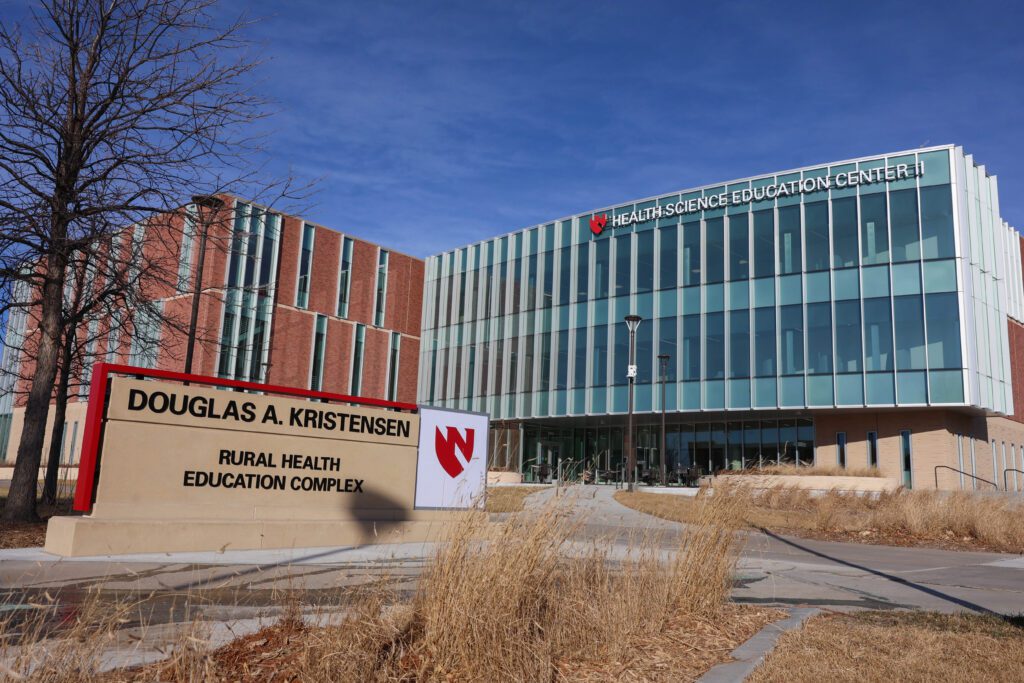
The Health Science Education Center II will open to its first class of medical students in fall 2026, and for the first time, UNMC will educate future physicians in rural Nebraska.
The new scholarships will cover at least half the cost of medical school tuition for all four years for the first class of students in Kearney. The scholarships have been made possible by generous benefactors and the UNMC College of Medicine. No state money has been used to create the scholarships.
“Improving the health of people across Nebraska is a major goal of UNMC and the College of Medicine,” said Bradley Britigan, MD, dean of the College of Medicine and Stokes-Shackleford Professor in the Department of Internal Medicine. “We are excited about our first cohort of medical students beginning at Kearney later this year, which is one more example of that commitment. And we are pleased, with the help of other generous donors, to be able to offer this support.”
Currently, 66 of Nebraska’s 93 counties are designated as medically underserved areas. Studies have shown students may be more likely to choose to practice in smaller communities after graduation if they are trained in rural communities.
Robert Messbarger, MD, inaugural associate dean for the UNMC College of Medicine’s regional medical school campus in Kearney, said the scholarships are indicative of the support the UNMC College of Medicine has received since it announced plans to have medical students at Kearney.
“I am grateful to these benefactors, and the college, for this wonderful effort,” Dr. Messbarger said.
With additional private support, the UNMC College of Medicine would like to extend the scholarships to subsequent classes of UNMC medical students in Kearney. Matching funds are available to support the new scholarships.
“We hope to be able to provide even more financial aid and to be able to extend these scholarships to future classes,” Dr. Britigan said. “However, additional philanthropic support will be needed to do so.”
Donors who commit a scholarship gift of $50,000 or more will have their gift matched by one-third by the College of Medicine. For example, a gift of $75,000 would be matched by the College of Medicine, with an additional $25,000 for students studying in Kearney.
Scholarships are a priority of Only in Nebraska: A Campaign for Our University’s Future, a historic effort to raise $3 billion from 150,000 unique benefactors to support the University of Nebraska.
Donors interested in learning more about the new scholarships may contact Brian Anderson, senior director of development for the College of Medicine at the University of Nebraska Foundation, at [email protected].
Mike Yanney was just 11 years old and the youngest of nine children when his dad died in Kearney, Nebraska. His mother turned to raising and selling vegetables, so that became Mike’s first job — selling vegetables to the local grocery store. He also detasseled corn, shined shoes and walked along the railroad tracks, looking for coal that had fallen from trains so his mother could make a fire. He even worked as a disc jockey, though he said he was terrible at that. But he and his family made it through the Great Depression.
Yanney told the University of Nebraska Foundation he remembered happiness during his early years, and he knew money didn’t buy that. You’re going to be successful, his mother told him. But true success will be measured by what you give of yourself to your community and your country.
By that measure and many others, Mike Yanney, who died Feb. 14 at the age of 92, was truly successful.
His early years shaped a lifelong desire to give back. Yanney supported campuses across the University of Nebraska System — the University of Nebraska Medical Center, University of Nebraska–Lincoln, University of Nebraska at Omaha and University of Nebraska at Kearney. He served as a trusted adviser to numerous chancellors and university leaders, always ready to strategize how to further university projects.
“Mike Yanney cared deeply about family and community, and to him, the University of Nebraska was both,” said University of Nebraska President Jeffrey P. Gold, M.D. “Over the years, he and his wife, Gail Walling Yanney, M.D., gave generously to the university, reflecting their profound care for those around them through support of initiatives that advance public health and enhance quality of life. Mike was equally generous with his time and ideas, always able to envision what was possible when passionate people came together. I was lucky to call him a friend, and I believe our state and our university are stronger because of his leadership, generosity and compassion.”
Mike and Gail Yanney made a leadership gift that led to the formation of the Healing Arts Program at the Fred & Pamela Buffett Cancer Center, which opened in 2017. Nebraska Medicine and UNMC named the facility’s Yanney Conference Room to honor the couple for their unwavering support of the project. He championed major capital projects at UNMC, including the Durham Research Towers, College of Public Health building, Munroe-Meyer Institute and Davis Global Center, lending advice, engaging the community and participating in fundraising initiatives.
Yanney was devoted to his wife, Gail. He established the Dr. Gail Walling Yanney Endowed Professorship in Anesthesiology and created a scholarship for College of Medicine students in her honor. A conference room holds her name in the Durham Research Tower on campus, and Mike also donated a Jun Kaneko sculpture for the front entrance of the Wigton Heritage Center in honor of Gail’s birthday.
In addition, the couple funded numerous scholarships and supported students through mentoring.
Yanney was a 1955 graduate of the Nebraska State Teachers College in Kearney (now UNK). In 1984, he founded what is now Burlington Capital, a company which manages public investment funds. He served as chairman emeritus.
Aside from his philanthropy, Yanney served the university by sharing his wisdom and business acumen. He served as a member of the University of Nebraska Foundation’s Board of Directors and as a foundation trustee. Mike and Gail received the foundation’s Perry W. Branch Award for Distinguished Volunteer Service in 2016. He served on two comprehensive campaigns to benefit the university: Campaign for Nebraska, from 2005-2014, and Only in Nebraska: A Campaign for Our University’s Future, which began in 2018. Mike, along with Gail, was serving on the campaign executive committee for Only in Nebraska at the time of his passing. UNK granted him an honorary doctorate in 1988. He and Gail received the Regents Medal, the University of Nebraska’s highest award, in 2013.
What others are saying
“Mike Yanney was a man who made a difference in his community. At UNMC and Nebraska Medicine alone, his impact included support of the Fred & Pamela Buffett Cancer Center, the Lauritzen Outpatient Center and countless other initiatives that benefited his fellow Nebraskans and many others. He was a humble and giving man, and for me, a mentor and personal friend. This is a great loss for Omaha and Nebraska, and we at the medical center send our condolences to Gail, Lisa and the rest of the Yanney family.” — H. Dele Davies, MD, interim chancellor, UNMC
“Mike believed in the power of education to transform lives and communities because he experienced it firsthand. He often shared how his mother insisted he would go to college and find a way to pay for it himself. Kearney State became the game changer that launched his extraordinary career. He never forgot that beginning. Through scholarships and steadfast support for UNK, he helped ensure that other students could find their own path. The Peterson-Yanney Memorial Bell Tower stands at the heart of our campus as a lasting symbol of his love for this university and for Kearney. His legacy will continue to inspire generations of Lopers.” — Neal Schnoor, Ph.D., chancellor, UNK
“Mike Yanney’s generosity extended beyond campus buildings and programs — it reached the hearts and minds of countless students whose lives he touched. Through scholarships, mentoring and his unwavering belief in education, he inspired generations of Huskers to dream bigger, work harder and give back to their communities. His legacy will be felt in the success of our students for decades to come.” — Katherine S. Ankerson, interim chancellor, UNL
“Michael Yanney believed in lifting others as he climbed, and he lived that belief every day. His life was a powerful testament to paying it forward. He showed Omaha, Nebraska, and the world that determination and selfless service can uplift entire communities. Because of his generosity and unwavering commitment to others, our university and our city will benefit for generations to come. His legacy challenges all of us to lead with purpose, serve with humility and invest in people.” — Joanne Li, Ph.D., CFA, chancellor, UNO
“The University of Nebraska Foundation mourns the loss of longtime volunteer, fundraising adviser and campaign volunteer leader, Mike Yanney. Mike was a mentor and partner to many University of Nebraska presidents and chancellors and a trusted philanthropic adviser for many University of Nebraska Foundation executives and development leaders over the years. He was a true American hero — a self-made, successful business leader; a selfless community volunteer; an advocate for those in need and a tireless champion for education and health care. When presenting Mike and Gail with our Perry W. Branch Award for Distinguished Volunteer Service in 2016, I commented that the Yanneys had set a standard for volunteer leadership that was truly exemplary and among the most impressive and impactful I had ever experienced in my career. Through his business, philanthropic and volunteer efforts, Mike had a profound impact on his community, state and country. We share our heartfelt condolences with his wife Gail, daughter Lisa and the extended Yanney family.” — Brian F. Hastings, president and CEO, University of Nebraska Foundation
Lincoln, Nebraska, Feb. 12, 2026 — Husker Nation shattered the previous Glow Big Red record, raising $3,667,815 during the annual 24-hour event to support the University of Nebraska–Lincoln.
During the event, 8,080 gifts were made to support priorities and causes across the university. The number of gifts and the amount raised both set records, exceeding the 2025 giving day totals: 7,241 gifts and $1,022,896 raised.
“Thank you to everyone who joined us by making a contribution during Glow Big Red,” Interim Chancellor Katherine S. Ankerson said. “Your generosity and Husker pride show the strength of our community and the power of collective action. Through your support, our campus community has access to the resources and experiences they need to flourish and achieve their incredible goals. Together, we are transforming lives and empowering the next generation of Huskers to lead boldly.”
Supporters representing each state made a gift during Glow Big Red. The areas that raised the most are Nebraska Athletics, the College of Agricultural Sciences and Natural Resources, College of Business, College of Arts and Sciences and College of Law.
Alumni and donors committed $548,000 in challenge and matching funds prior to the giving day to encourage others to give during Glow Big Red.
The Cornhusker Marching Band was one of those areas, with gifts going to rebuild large instrument storage lockers in the tunnel between the Westbrook Music Building and Kimball Recital Hall.
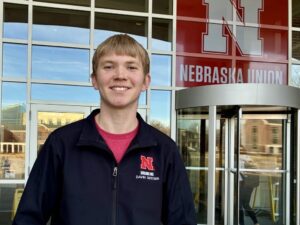
Davin Seeger, a junior from Omaha, plays cymbals in the band, which he calls his “second home.” A music education major, he hopes to teach elementary school music or become a high school band teacher after graduating.
“The Cornhusker Marching Band has given me a strong community and a fun-centered environment,” Seeger said. “I see the same 300 people every single day. The band gives all of us a chance to perform for tens of thousands of people every year.”
Another area supported by the giving day is the Nebraska College Preparatory Academy, a college access program that prepares first-generation students from income-eligible families for college and future careers.
NCPA scholar Josselyn Becerra of Omaha is a senior psychology major. A graduate of Omaha South High School, she is the first person in her family to attend college. She hopes to work as a victim advocate after graduation.
“The support provided through NCPA makes the college experience less daunting,” she said. “The scholarship support takes away one of the biggest insecurities that you can have, which is financial stress. It has allowed me to focus on educational experiences and internships.”
Glow Big Red started in 2019 in recognition of the university’s 150th anniversary. Across the university, there were more than 200 causes to support, including scholarships for students, such as Anna Hadan of Omaha, a senior mechanical engineering major.
“During days like Glow Big Red, I think it goes to show what can happen when somebody cares about you and wants to see you do well and succeed,” Hadan said. “It means a lot to me.”
Glow Big Red began at noon Feb. 11 and concluded at noon Feb. 12. Gifts were made at https://glowbigred.unl.edu.